Last updated: July 23, 2026
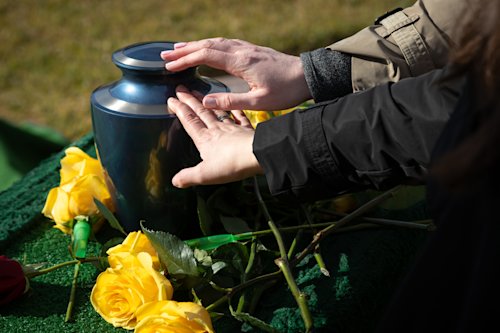
A direct cremation is simply a cremation without a funeral service. The person who has died is taken to be cremated with no mourners present, usually in a simple coffin, at a time arranged by the funeral director. Many families then mark the death separately, in their own time and their own way.
This kind of funeral has become a familiar choice across the UK. Direct cremation now accounts for around one in five funerals, with recent reports putting the figure at 21%*. Some sources report a lower share because they count things differently. It's best to treat these as separate snapshots rather than one single national figure.
Social and economic
There are a few social and economic trends that help explain why so many families now choose a direct cremation. Cost is one of the biggest. When money is tight, a simpler, lower-cost funeral can feel like the kind, sensible choice.
A direct cremation usually costs far less than a simple attended funeral. There's no spending on extras like cars, flowers or an order of service, so the overall figure tends to be much lower. For families facing rising living costs, that difference matters.
Cost is not the only reason, though. Direct cremation has stayed popular as part of a wider shift in how we approach funerals, with more families choosing types of funerals in the UK that feel right for them rather than following one fixed pattern.
Cost and simplicity
The savings can be significant. A simple attended funeral averaged £4,285 in recent reporting, while a direct cremation averaged £1,597, making it the cheaper option by a wide margin*.
Prices do vary a lot, though, depending on who you choose. Some online providers advertise low headline prices, local funeral directors may quote in their own way, and a crematorium's own fee can be lower but won't include a funeral director's services.
So what should you do when looking at prices? Simple. Always compare the full, all-in price rather than the headline figure. Some quotes leave out important things or could add an extra charge later for something specific you need. For example, collecting your loved one from a home or other non-hospital location may not be included in the standard price.
Changing reasons for choosing direct cremation
People choose a direct cremation for all sorts of reasons. Often it reflects the wishes of the person who has died. For others, it feels simpler, can be quicker to arrange, costs less than a traditional funeral, or they want the freedom to arrange a service in their own time, at their own pace.
Different organisations report different reasons for choosing direct cremation, so while they’re all worth keeping in mind, try not to fixate on one. What matters most is what feels right for you and your family.
Changing attitudes
Awareness of direct cremation has grown a lot in recent years. Research shows that most people in the UK now know what it is, with recent figures putting awareness at 80% or higher*. As demand has grown, most independent funeral directors now offer direct cremation as one of their standard services.
This wider availability reflects a broader change in how the UK thinks about funerals. More and more families are choosing a less traditional, more personal approach to services and ceremonies. There's no single right way to honour a deceased loved one, and that can be a comforting thought.
Choosing a direct cremation does not mean choosing to do nothing. Many families who arrange one still hold a separate wake, memorial or celebration of life in their own time.
Marking the death in your own way
A direct cremation gives families the freedom to say goodbye in a way that feels right for them. Because you don't attend the cremation itself, we always encourage families to find another way to come together and mark the death of someone they love.
Most people who choose this kind of funeral do exactly that. A majority still hold some form of separate gathering*, whether that's a quiet meal with family, a service at a place of worship, or a larger celebration of a life well lived. Our Direct Cremation Plan was created with families in mind, as the funeral director can let you know the date of the cremation. If you wanted your gathering to coincide with the cremation date or just have a quiet moment to yourself, you can.
The reassuring part is that there's no rush and no fixed format. You can take your time, choose a meaningful date for the memorial, and create something that truly suits the person you're remembering.
What the research says about why attitudes are shifting
The reasons behind this shift go well beyond money. Research into changing funeral choices points to several personal, non-financial drivers.
Many people want more control over how they grieve, and more privacy too. Holding a memorial separately from the day of the cremation lets families decide who comes, when, and how. It also gives space to make the farewell feel personal, rather than following a set routine. For many, that sense of choice is exactly what makes a direct cremation feel right.
Practical choices
Deciding between a direct cremation and a simple attended funeral is a personal choice, and neither is better than the other in all cases. It comes down to what feels right for you and your family.
A direct cremation takes place without a formal service, and usually without mourners at the crematorium. A simple attended funeral, by contrast, includes a service that family and friends can attend. Some providers do offer attended variations, and some may include the option of a family viewing, so it's always worth asking what's available.
A direct cremation is usually the cheaper option, and it may suit those seeking a non-traditional, lower-cost funeral, or one with no service at all. It may not suit families who feel they need a traditional ceremony or a religious service to say goodbye. Both choices are valid, and the right one is simply the one that brings you comfort.
What happens next
The process is more straightforward than many people expect. In 2024, the paperwork in England and Wales was simplified further, removing the requirement for a separate cremation medical certificate.
In broad terms, here's what usually happens. After the death is registered, the registrar issues a Certificate for Burial or Cremation, often called the 'green form'. The crematorium needs this before a cremation can go ahead.
A cremation application form is completed by the applicant. Certain medical details are checked, like whether there are implants. These can be hazardous during a cremation.
Your funeral director handles the collection and care of your loved one and guides the paperwork through, while the crematorium carries out the cremation process. Afterwards, the ashes can be returned to loved ones if you wish.
What to check before you choose
Choosing a provider can feel daunting, so it helps to know what to ask. A few simple questions can save your family from surprises later. We'd gently suggest checking the following:
- The full, all-in price, and whether the crematorium fee is included
- Whether there are collection limits or extra charges for non-hospital locations
- Whether and when the ashes will be returned to you
- The provider's typical timescales
- Whether a family viewing or pre-cremation visit is offered by the provider, if that matters to you
- Whether the provider uses subcontractors or offers local, personal care
Comparing providers like-for-like really helps. Headline prices can leave out essentials or quietly add optional extras, so the cheapest figure isn't always the cheapest funeral.
We’re here to help
At Golden Charter, we've over 35 years' experience in funeral planning, and more than one million people have planned ahead with us*. We're here to make a difficult subject a little easier, and to help you arrange things in the way that feels right for you and the people you love.
Our friendly UK-based team is here to answer your questions from 9am-5pm, Monday-Friday. Give them a call, free, on 0800 090 2258.
Alternatively, your local, independent funeral director can help guide you through your choices. Search for the closest member of our network in your local area using our free search tool – and don't forget to look for the Golden Charter seal of approval.
If you decide direct cremation isn't the right choice for you, we also offer a range of traditional funeral plans designed to suit different wishes and needs.
Whenever you’re ready, we’re here for you.